Gene Bachman
Mechanical designer and product developer with more than ten years of engineering and product-development experience.
Professional Photograph
Reserved for an approved professional photo of Gene Bachman.
A career built around mechanical problem-solving
Placeholder — draft biography Gene Bachman is a mechanical designer and product developer with more than ten years of engineering and product-development experience. His background spans mechanical design, prototyping, and hands-on product iteration across multiple industries. This section is a placeholder pending an approved short biography and should be replaced with his own words before the site goes live.
Read more about how the linkage technology came about in the design history below, or connect with Gene directly.
From an ATV seat mechanism to a prosthetic-knee prototype
The following outlines the general path the technology has taken. It reflects Gene Bachman's own account of the project's development and is not independently verified.
-
Origin: Adjustable ATV Seat-Height Mechanism
Gene worked through a multi-link approach to adjusting seat height on an ATV, using a connected set of links and pivots to create a controlled, repeatable motion path — later issued as U.S. Patent 10,328,822.
-
Recognizing a Broader Motion Principle
Gene identified that the same linkage principle used for the seat mechanism could potentially describe other controlled motion paths, including human joint movement — later issued as the broader U.S. Patent 11,059,395.
-
Early Prosthetic-Knee Concept
Gene began studying an existing six-link reference mechanism used in prosthetic-knee designs and explored whether a reduced-link version could achieve a comparable motion path.
-
3D-Printed Prototype
An early physical prototype of the reduced-link prosthetic-knee concept was built using 3D printing to test the mechanical motion path.
-
Current Stage: Early Development & Partner Outreach
Next EV To Do is now seeking engineering evaluation, co-development opportunities, manufacturing relationships, and licensing conversations across four-link mechanism applications beyond the original prosthetic-knee prototype.
Issued Patents
Gene Bachman holds two issued U.S. utility patents, individually (no company assignee), covering the linkage principle behind Next EV To Do's technology.
Adjustable Seat and Support System
Inventor: Eugene Edward Bachman. Filed May 24, 2013 · issued June 25, 2019. Covers the original adjustable ATV seat-height mechanism — the project's starting point.
View full patent on Google PatentsPosition Changing System
Inventor: Eugene Edward Bachman. Filed June 25, 2019 · issued July 13, 2021. Generalizes the concept into a three-link, three-pivot system intended to replace traditional four-link parallelogram mechanisms.
View full patent on Google PatentsSelected figures, as filed
These are the original, official drawing sheets from the two patents above (self-hosted from the public USPTO/Google Patents record, at their native low-resolution scan quality — click through to Google Patents for the full document). Each is labeled with its actual FIG. number and whether it's the patent's "prior art" comparison or the invention.
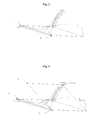
Adjustable seat mechanism
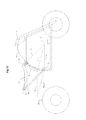
Mounted on an ATV
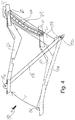
Vehicle seat application
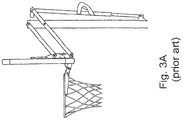
Conventional basketball hoop mount
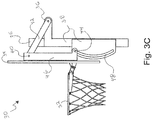
Same mount, patented version
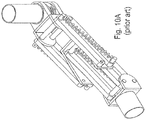
Conventional camera-mount stabilizer
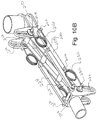
Same stabilizer, patented version
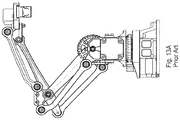
Conventional robotic-arm linkage
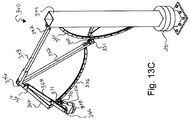
Same arm, patented version
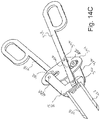
Scissors mechanism
The FIG. 14C scissors embodiment is also referenced on the Applications page alongside the garden-shears worked example.
Interested in learning more about the project?
Next EV To Do welcomes conversations with engineers, manufacturers, researchers, and licensing professionals.