Rethinking the Four-Link Mechanism
The Dynamic Triangular Mechanism is an early-stage linkage concept intended to reproduce useful motion paths with a simplified mechanical architecture.
Gene Bachman is seeking manufacturers, engineers, and development partners interested in evaluating whether the mechanism can reduce weight, part count, complexity, manufacturing requirements, or operating effort in suitable applications.
Important: these are evaluation targets, not proven benefits. Whether any given advantage holds up depends on testing a specific mechanism against a specific application. "Dynamic Triangular Mechanism" is Gene's working name for the concept covered by his two issued U.S. patents (10,328,822 and 11,059,395) — see the Inventor page for both. Having issued patents doesn't mean every four-link mechanism, or every application discussed on this site, falls within their claims; that determination is a legal question for qualified patent counsel.
From an ATV seat mechanism to a prosthetic-knee prototype
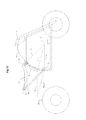
The underlying linkage concept — now referred to as the Dynamic Triangular Mechanism — originated with an adjustable ATV seat-height mechanism, where Gene Bachman worked through how a small set of connected links could create a controlled, repeatable motion path. Recognizing that the same motion principle might apply to human joint movement, Gene later adapted the architecture into an early 3D-printed prosthetic-knee prototype — one example of the broader four-link mechanisms the concept is intended to be evaluated against.
The work is still in an early, pre-commercial stage. It has not been clinically tested, medically approved, or proven ready for production or human use. Gene is sharing it now to begin technical and commercial conversations with qualified partners.
Read the design history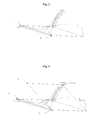
An architecture built around three design priorities
Early development has focused on the following targets. Figures shown are inventor-reported and not yet independently verified — see The Mechanism for detail.
Reduced-Link Architecture
An early-stage design intended to achieve a controlled motion path using fewer links than the six-link reference mechanism Gene has studied.
Lightweight Design Target
Component count and geometry are being explored with a lightweight target in mind, relative to the heavier reference mechanism used for comparison.
Adaptable Motion Path
The same linkage principle is being evaluated as a general-purpose motion path that may adapt to other mechanical and product applications over time.
Evaluate the Outcome, Not Just the Geometry
Manufacturers generally will not replace a mechanism simply because a different design exists. A new mechanism becomes commercially relevant only when testing demonstrates a meaningful advantage. These are the dimensions Gene believes are worth evaluating.
Part-Count Reduction
Could the mechanism perform the required motion with fewer components?
Weight Reduction
Could it reduce overall product mass in weight-sensitive applications?
Manufacturing Efficiency
Could fewer or simpler parts reduce machining, tooling, assembly, or inventory requirements?
Motion Performance
Could the architecture produce a useful or improved motion path?
Durability & Maintenance
Could it reduce wear points, service requirements, or common failure modes?
Product Differentiation
Could the mechanism enable a smaller, lighter, more efficient, or otherwise differentiated product?
Every item above is an evaluation question, to be tested case by case — not a claim about what the mechanism already does.
Built for technical collaboration
This project is at the stage where outside engineering perspective matters most. Gene is seeking:
Engineering evaluation of the linkage architecture and motion behavior.
Co-development partnerships with mechanical and medical-device engineers.
Manufacturing relationships for prototyping and future production planning.
Licensing conversations with qualified patent licensees and investors.
Let's Discuss the Next Stage of Development
Gene is currently seeking qualified organizations and professionals interested in evaluating, developing, manufacturing, or licensing the mechanism.